Tigray coffee: Growing high‑value coffee through agroforestry
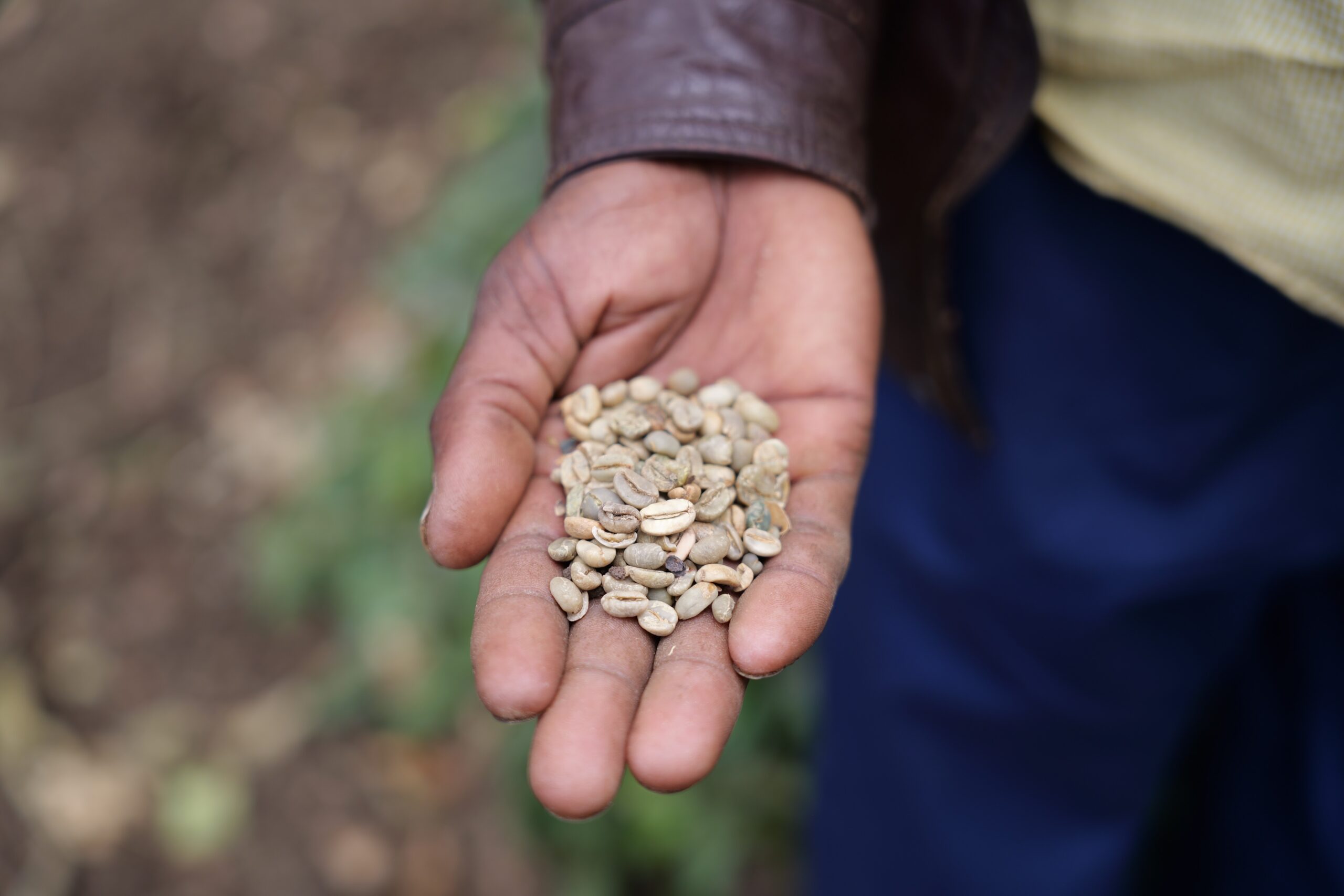
Ethiopia has long been celebrated as the birthplace of coffee, known worldwide for its rich and diverse flavors. Yet while many coffee lovers have tasted Ethiopian beans, few have experienced coffee from the Tigray Region, where the dry climate and high altitude create a distinctive profile with subtle, spice‑like notes that set it apart from other Ethiopian coffees.
Within the EthioTrees project, over 1,500 farmers are practicing agroforestry, integrating fruit and forest trees into their crop production. Among the range of species grown, coffee stands out as a high‑value crop with strong market potential. To understand better how coffee fits into our farmer‑led agroforestry model and how it contributes to household livelihoods, we spoke with Aregawi Gebresalassi, an agroforestry farmer and EthioTrees beneficiary.
Aregawi joined EthioTrees around two years ago. Since then, he has planted more than 600 seedlings, including Acacia, Albizia, mango, and orange trees. He proudly shares that about 85% of these seedlings have survived.

The benefits he receives are twofold: fruits harvested for consumption or sale, and income through the project’s carbon finance benefit‑sharing mechanism. He describes how he used his most recent payment: “With the money I received, I bought a water pump to irrigate my plants. I also fenced the garden and hired an extra person to help with planting and maintenance. With what remained, I purchased essential groceries for my family, such as cooking oil, sugar, and salt.”
Beyond income, the trees themselves improve the productivity of his land. For example, he explains how Albizia enriches the soil: “I placed the Albizia tree in the middle of the field. It doesn’t cast much shade and it improves soil fertility. The fallen leaves turn into humus, which helps the crops yield well.”
While Albizia can grow alongside many crops, mango and orange trees create shaded conditions that are suitable for only specific understory plants, coffee being one of them. Aregawi explains his coffee harvesting process: “First, when the crop bears fruit, you pluck it from the branch. After harvesting, the next step is drying it. The third step is grinding.”
Coffee holds both economic and cultural value in Ethiopia. As Aregawi explains, high market prices are partly due to the fact that: “Ethiopian coffee is mostly produced in the Oromia region, particularly in Jimma. It is not common in Tigray.”
Yet in Tigray, as throughout the country, coffee is deeply embedded in daily life and social rituals. Aregawi describes the traditional preparation: “To hull one kilogram of coffee, we mill it by hand using traditional top and bottom grindstones. The beans release a rich aroma, and the coffee is served in a white cup with its matching saucer. After spreading the reeds, the entire process becomes a symbol of joy.” Coffee ceremonies bring families and communities together, moments of conversation, connection, and celebration.

Today, Aregawi produces around 120 kg of coffee annually. Most of it is used at home, but he sells part of it once a year on the local market. Coffee enables him not only to save money but also to earn enough to gradually expand his activities.
He dreams of planting over 1,000 coffee trees and eventually selling his coffee internationally. His vision goes beyond personal success, it is about placing Tigray coffee on the global map.
“When a large amount of coffee begins to be produced in Tigray, buyers from around the world will come here to purchase it. My joy will be limitless. I will proudly say: I have made history.”
Subscribe to our newsletter
Join our journey by subscribing to our stories.
Related stories
These are our stories